

Supply Chain Strategy and Its Business Impact
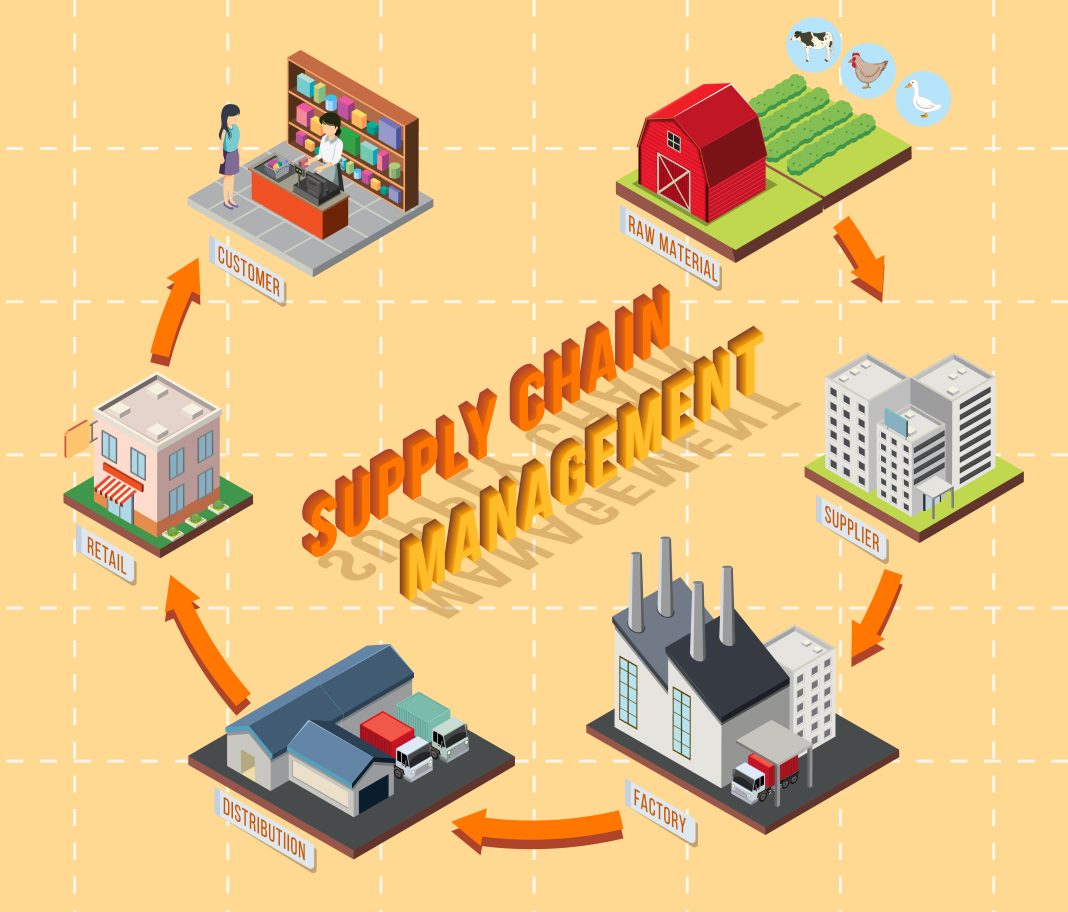
Supply chain management is the end-to-end coordination of the processes, resources, and relationships through which a manufacturer sources materials, converts them into products, and delivers those products to customers. The supply chain strategy decisions that a manufacturer makes — where to source materials, from how many suppliers, with how much inventory buffer, with what delivery lead times to customers — collectively determine a significant proportion of the manufacturer’s cost structure, service capability, financial risk exposure, and competitive positioning. The supply chain is not an operational detail; it is a strategic asset or liability depending on how well it is designed and managed.
The supply chain competitive advantage that the best-managed manufacturers have built: the combination of cost efficiency (sourcing and producing at lower cost than competitors through supplier relationships, production scale, and operational efficiency) and service capability (delivering to customers faster and more reliably than competitors through network design, inventory positioning, and logistics capability). The manufacturer who has both cost efficiency and service capability has a supply chain that is genuinely difficult to compete against; the one who has optimised for one at the expense of the other has made a strategic choice whose consequences emerge most clearly when competitive conditions challenge the trade-off.
Supplier Relationship Management
The supplier relationship strategy that most clearly differentiates the manufacturers with resilient, high-performing supply chains from those who experience recurring supply disruptions: the tiered supplier management approach that distinguishes between the strategic suppliers whose products are critical to the manufacturer’s value proposition and whose relationship requires intensive management and investment, and the commodity suppliers whose products are widely available and whose relationship is managed primarily on price and delivery performance. The strategic supplier who receives the manufacturer’s long-term volume commitments, collaborative product development investment, and dedicated relationship management provides the quality, innovation, and reliability that commodity supplier management cannot produce.
The supplier development investment that most reliably improves both supplier performance and supply chain resilience: the technical assistance and capability building that the manufacturer provides to key suppliers — the quality engineers who work with the supplier to improve their manufacturing process, the lean manufacturing consultants who help the supplier reduce their lead time, and the technology investment that improves the visibility and accuracy of the supplier’s production scheduling. The supplier whose capability has been built through the manufacturer’s investment is more capable, more committed to the relationship, and more aligned with the manufacturer’s quality and delivery standards than the supplier who has been selected solely on quoted price.
Supply Chain Resilience and Risk Management
The supply chain disruption risk that the COVID-19 pandemic made visible to manufacturers who had previously not considered it a strategic priority: the concentration risk of single-sourcing critical components from single suppliers in single geographies. The manufacturer who relied on a single supplier in a single country for a critical electronic component discovered that the combination of factory closures, logistics disruptions, and border restrictions could halt production entirely for months with no viable short-term alternative. The supply chain resilience investment that the pandemic motivated — dual-sourcing critical components, near-shoring or reshoring some production, increasing strategic inventory buffers — addresses risk that was always present but that had never previously materialised with the simultaneous severity of multiple disruptions.
The supply chain resilience strategy that most cost-effectively reduces concentration risk without accepting the full cost of maintaining redundant capacity: the qualified secondary supplier who has been developed to a level of capability where they could quickly increase volume if the primary supplier is disrupted. The secondary supplier who receives a small portion of the volume regularly (maintaining their process capability and relationship with the manufacturer) is positioned to absorb a larger share quickly if needed — a resilience investment significantly less costly than maintaining a fully redundant primary supplier capacity.
Supply Chain Visibility and Technology
The supply chain visibility capability that most directly improves the manufacturer’s ability to manage the supply chain proactively rather than reactively: the real-time inventory visibility across the supply chain that reveals where stock is, how much there is, and when replenishment is needed at each stage from raw material at the supplier through work-in-progress on the production floor to finished goods at the distribution centre and customer location. The manufacturer who knows only what inventory their own facility holds is making supply chain decisions with incomplete information; the one whose system provides visibility into supplier inventory and production schedules has the information to anticipate supply shortfalls before they affect production.
The supply chain technology investment that most improves planning accuracy and reduces both stockouts and overstock simultaneously: the demand-driven supply chain planning system that builds production and procurement schedules from customer demand signals rather than from the push-based forecast that schedules production based on what the manufacturer expects to sell rather than what customers are actually ordering. The demand-driven system that pulls production based on actual customer orders reduces the forecast error that accumulates through the supply chain from customer to finished goods to production to procurement — the bullwhip effect that causes supply chain inventory oscillations that are much larger than the underlying demand variability.
Last-Mile Delivery and Customer Service
The last-mile delivery challenge that most distinguishes the B2B manufacturer’s supply chain from the B2C e-commerce supply chain: the delivery of large, heavy, or complex products to industrial or commercial customers who require scheduled delivery windows, specialised handling, and often installation or commissioning services alongside the product delivery. The last-mile delivery capability for industrial products — the network of regional distribution centres, the customer delivery scheduling systems, and the delivery teams equipped to handle the specific requirements of each product category — is a significant investment that creates the service capability differentiation that price alone cannot replicate.
The customer service level commitment that most clearly drives supply chain investment decisions: the explicit definition of the service level that the business is committing to provide — the percentage of orders filled from stock at the time of order, the lead time between order and delivery, the delivery reliability (percentage of deliveries arriving within the committed window) — and the supply chain design required to achieve that commitment economically. The manufacturer who has not explicitly defined the service level they are committing to is optimising the supply chain toward an unclear standard; the one with explicit service level commitments has the target against which supply chain investment can be justified and performance can be measured.

